
Energy Plus House Weber - highest energy efficiency in the tension between tradition and modernity
Short Description
Status
completed
Summary
Starting position/ Motivation
The challenge of transforming a culturally and historically valuable, though structurally poor building, into an “Energy Plus House” (a modern, energy-saving house) was the starting position and motivation behind this work.
Contents and objectives
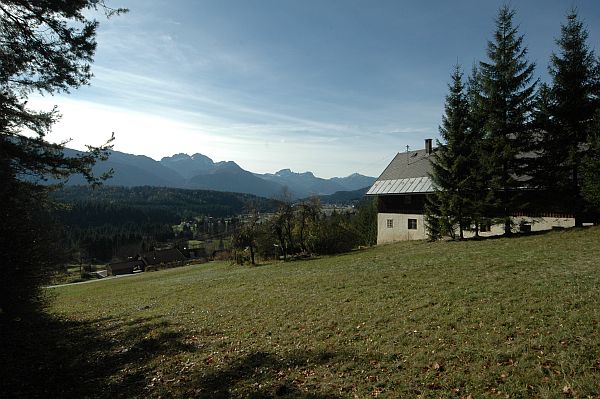
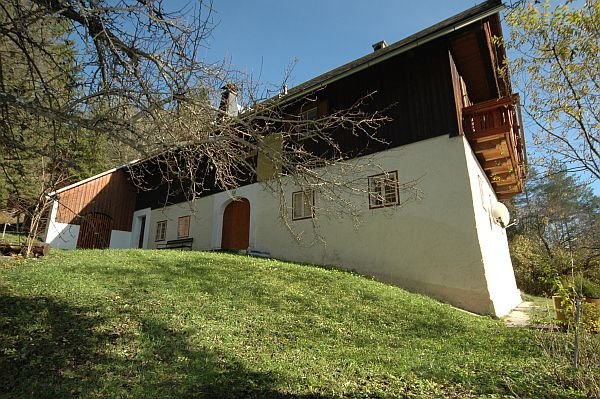
The former farmhouse commonly known as “Weber” is to be converted into an “Energy Plus House” using a comprehensive approach, as a showcase project to open it up to more people by way of tourism with holiday flats and a conference room.
Methodical approach
Once the current house plans had been drawn up and the building structure with the static equilibrium conditions had been examined, the findings could be further built upon. The process of producing a draft was started and already largely completed by the time the interim report was conducted. Within the project management itself the structuring of the work schedule was laid down and the dates for the individual meetings in the work packages were announced for the entire duration of the project. In 39 meetings and after extensive research and active planning, the architecture, construction biology, structural physics, static equilibrium, (electrical and plumbing) appliances, or more precisely, the energy efficiency together with the geomancy, were brought to a comprehensive interdisciplinary result.
Results and conclusions
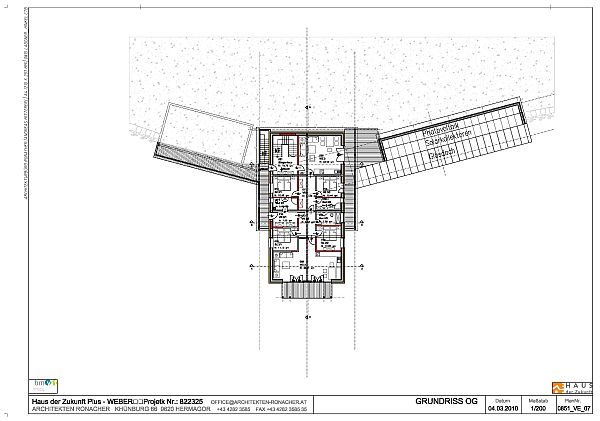
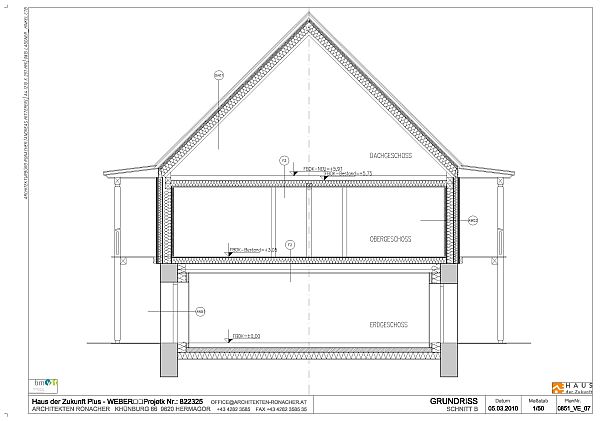
Due to the given room structures on the three floors, it was determined that three holiday flats could be accommodated in the edifice and that the loft should be completely reconstructed for the building of a conference room. All parts of the bare structure and existing walls had to be brought up to the standard of a (so-called) “passive house”, a low-energy house. Following the presentation of the field experiments carried out by the Fachhochschule Kärnten (a local provincial school), it was determined that the intended course of renovating the building with a thermal cellulose insulation could be taken. This had a significant bearing on the further planning.
Summary
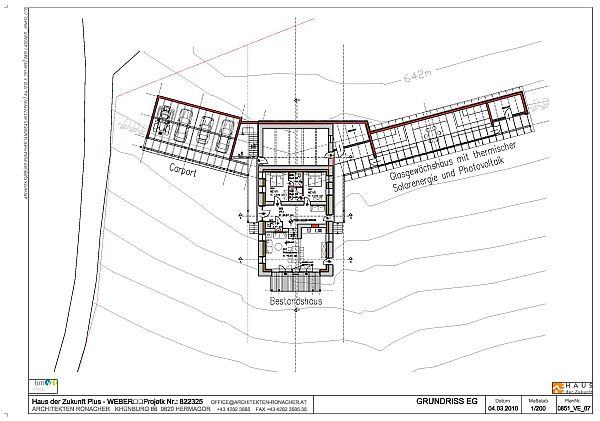
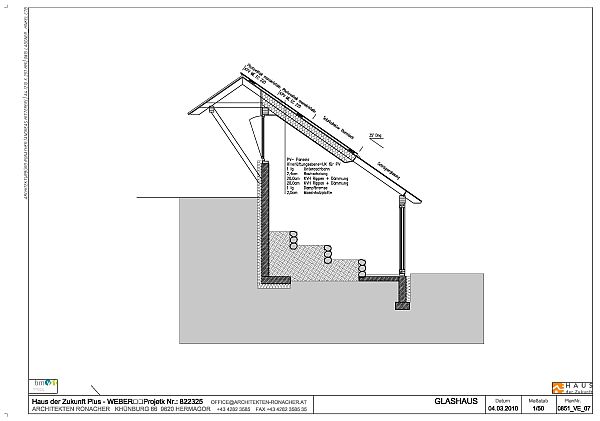
The drawing up of the concept and the planning of the individual focal points were derived from the original idea. Following the consequent planning of details and a calculation of costs, it was determined that the project could be funded despite the high level of thermal expenditure and would definitely go ahead. Achieving an “Energy Plus House” was only made possible by the creation of a glasshouse with a photovoltaic and thermal collectors.
Outlook
In the meantime all the important specialist trade tasks have been designated. The project “Energy Plus House Weber” has been in its final phase of implementation since 11th October, 2010. According to the ensuing project titled “Energy Plus House Weber, a showcase caught between the traditional and the modern for the achievement of the highest strategic energy targets” (new forms of energy 2020, 3rd version/update), and the current construction schedule, it should already be possible to hold the first courses on the topics of “Energy Efficiency”, “Construction Biology” and “Ecology”, etc. in the summer of 2011.
Project Partners
Project management
Architekt DI Dr. Herwig Ronacher
Project or cooperation partner
Contact Address
Architekten Ronacher
Arch. Dipl.Ing. Dr. Herwig Ronacher, Arch. Dipl.Ing Andrea Ronacher
Khünburg 86, A-9620 Hermagor
Tel.: +43 (4282) 3585-0
Fax: +43 (4282) 3585-35
E-Mail: office@architekten-ronacher.at
Web: http://www.architekten-ronacher.at