
Pallets never pall - Development of the Pallet House to series-production readiness
Short Description
Status
completed
Abstract
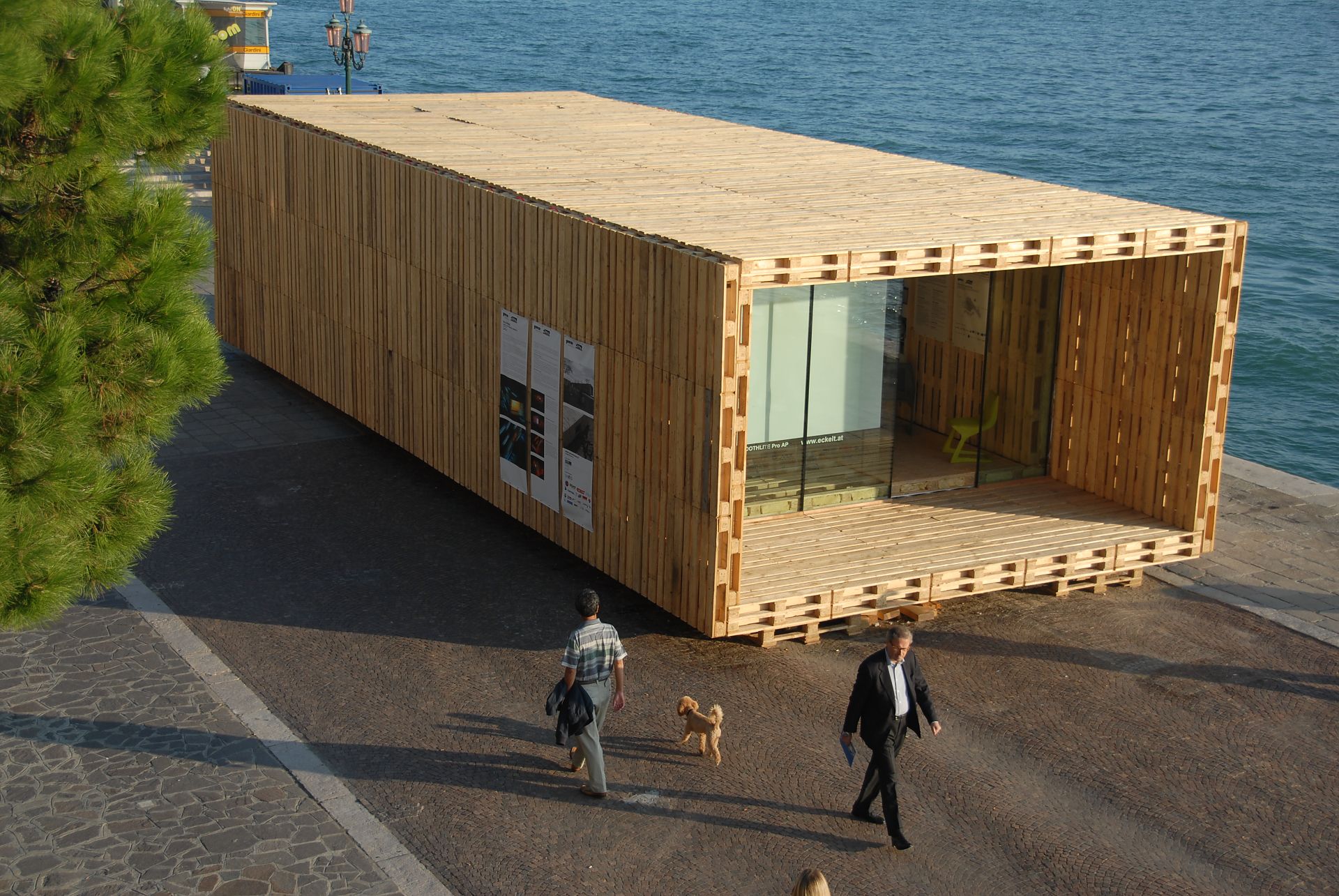
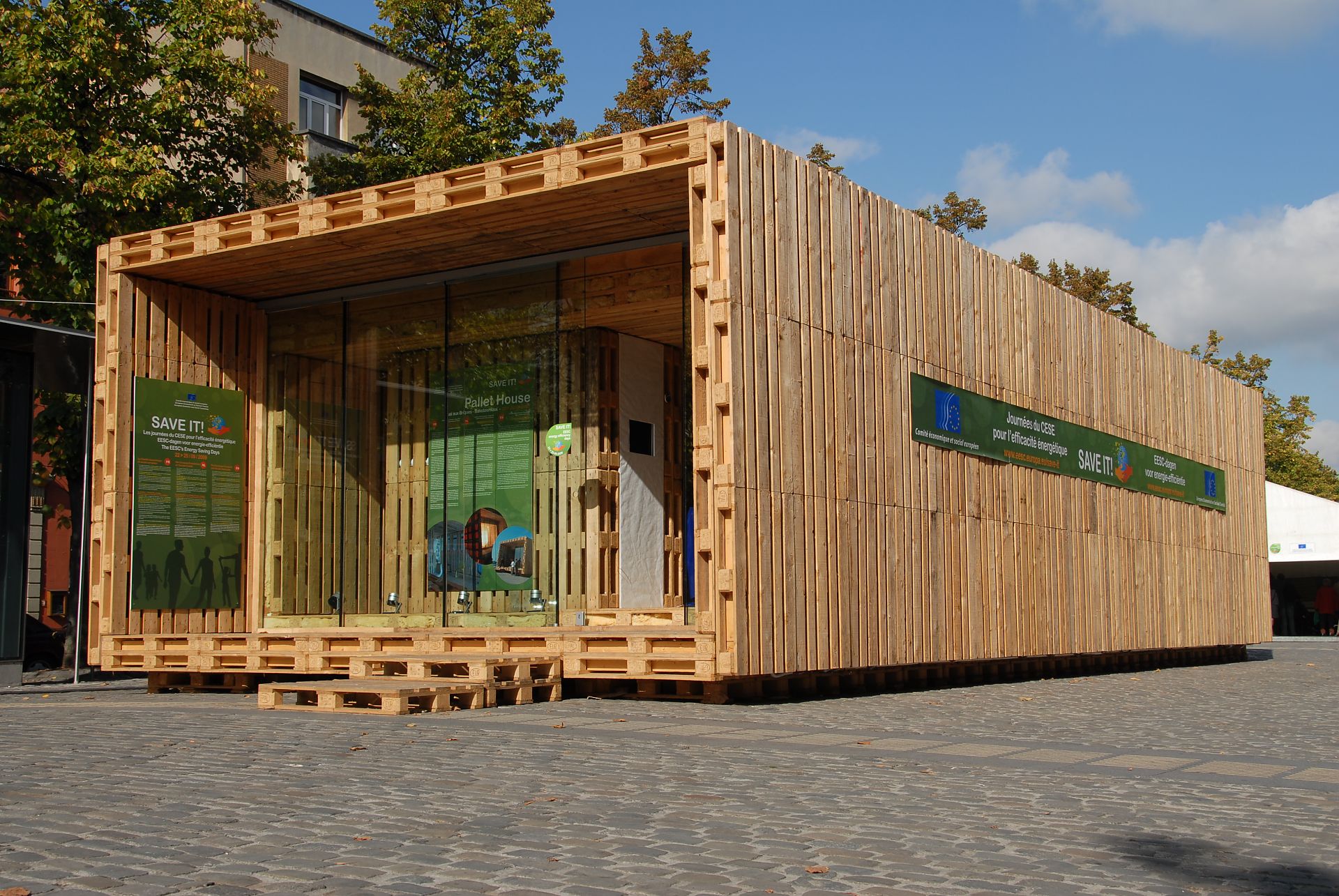
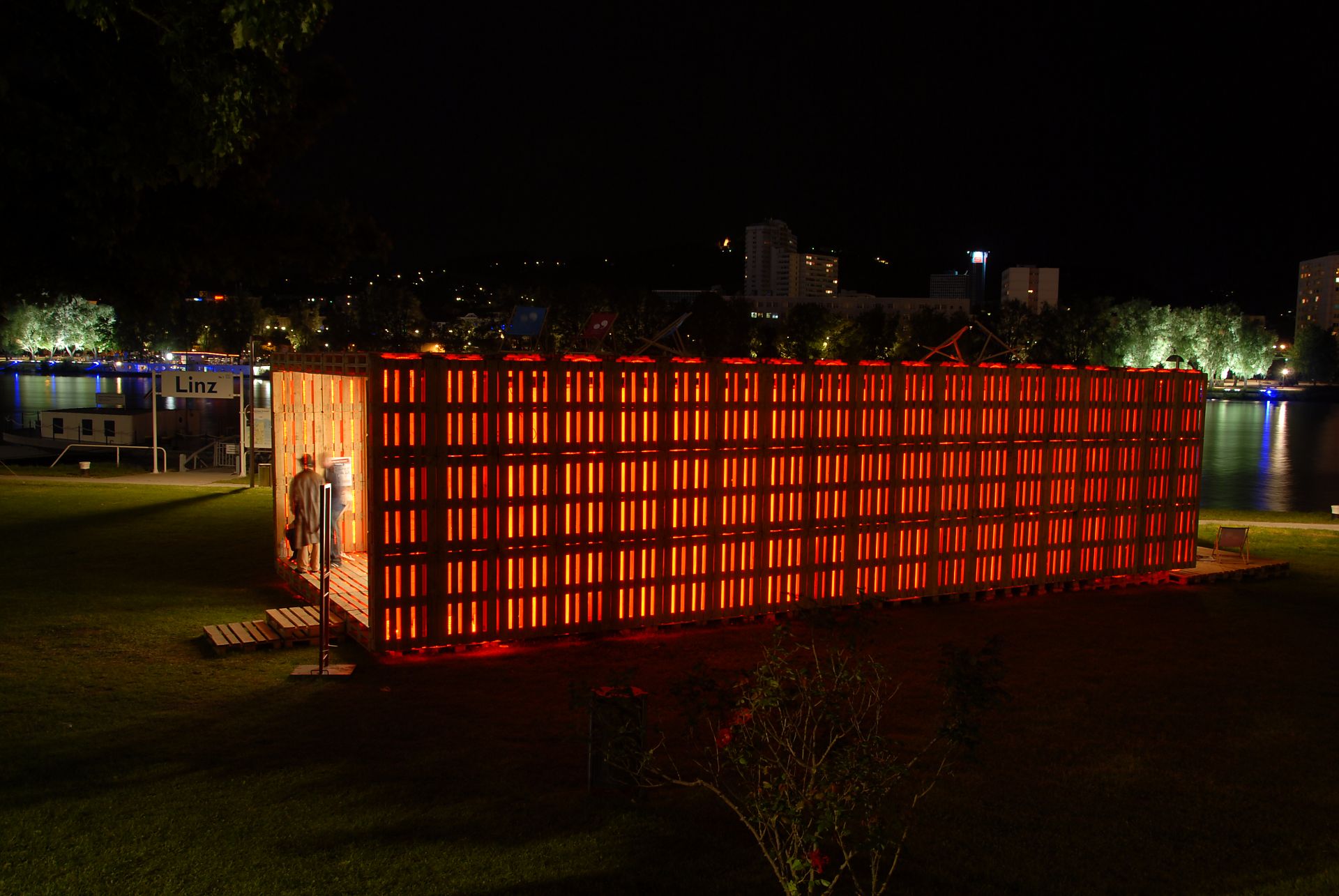
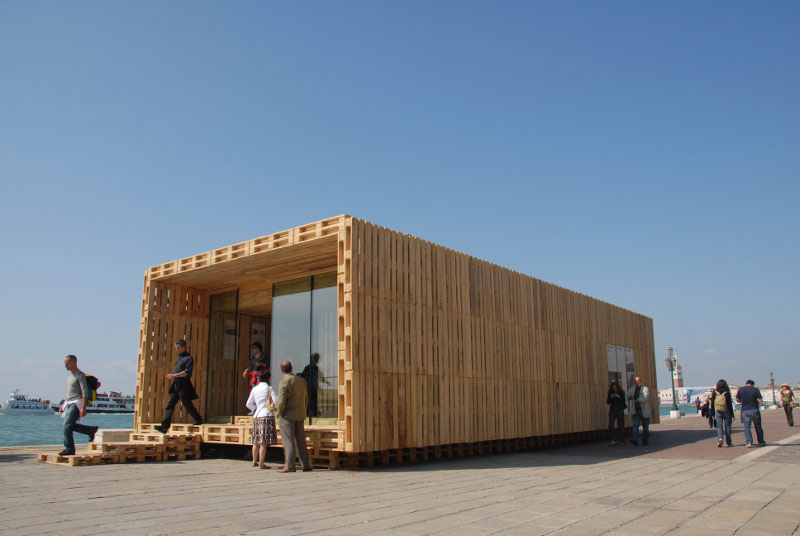
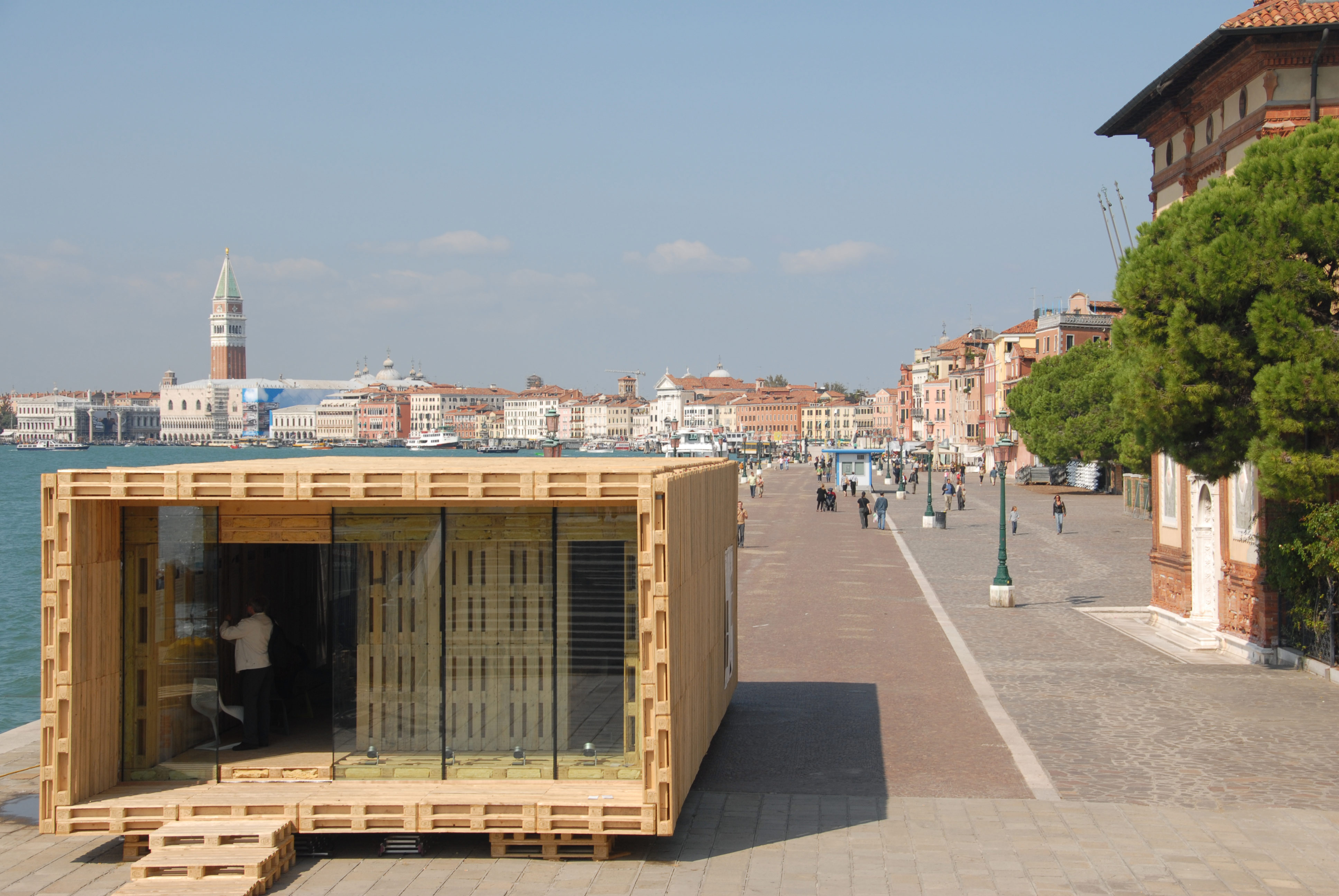
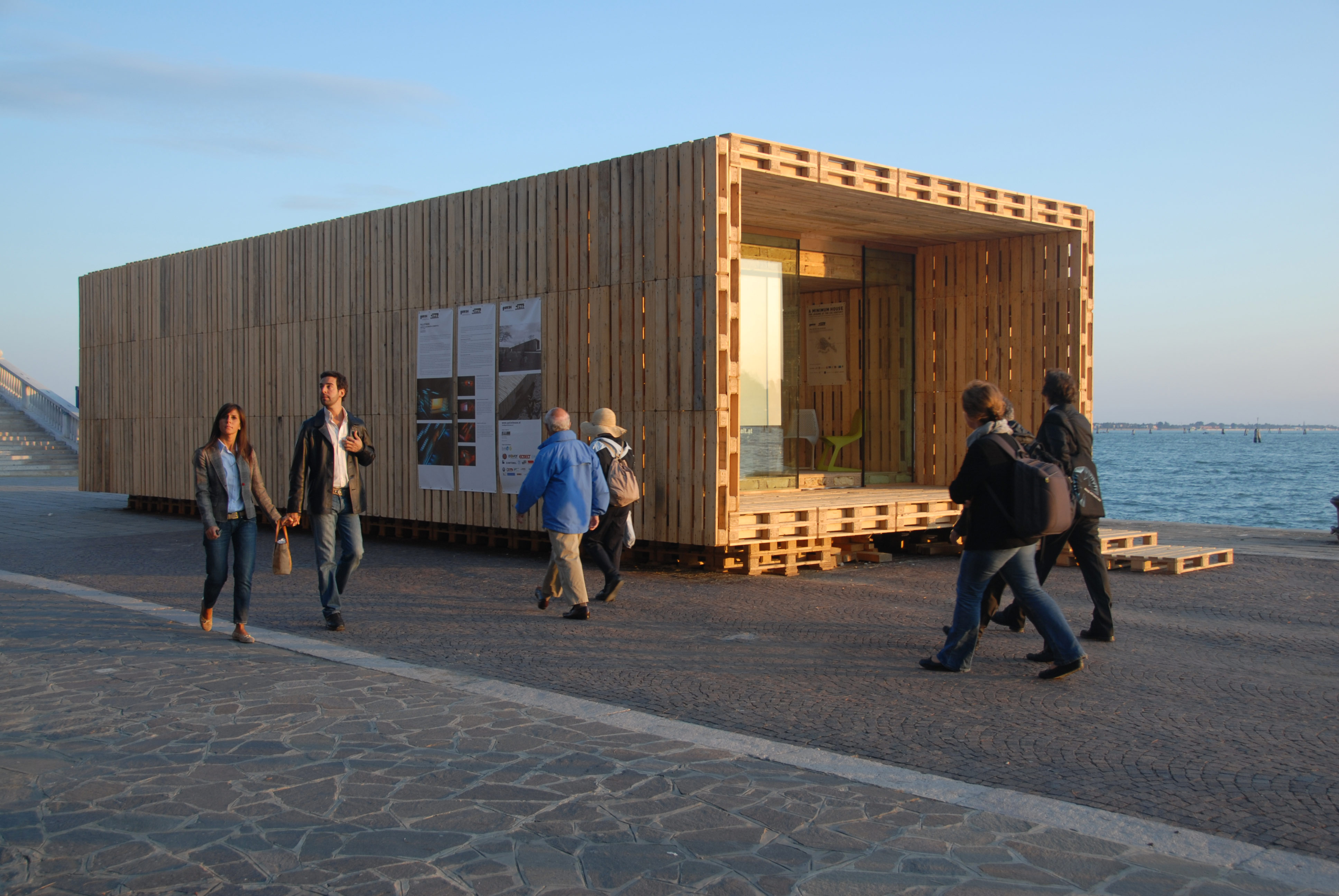
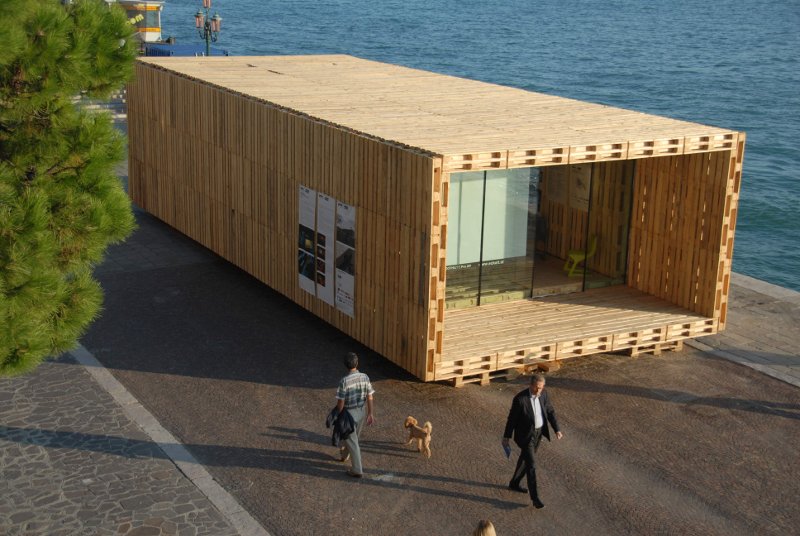
The "Pallet House" was developed by Gregor Pils and Claus Schnetzer while they were still studying at the Vienna University of Technology (teaching support by Karin Stieldorf). It shows all well-known advantages of wood construction plus an added value of sustainability due to the re-use of pallets.
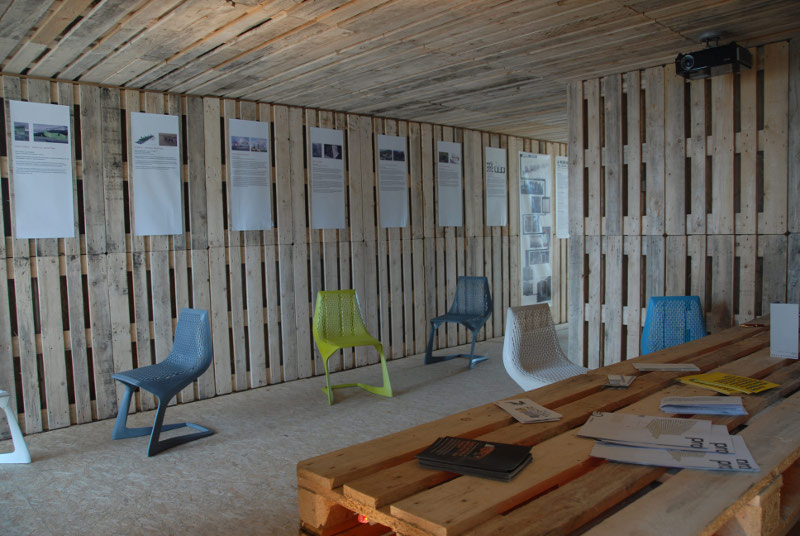
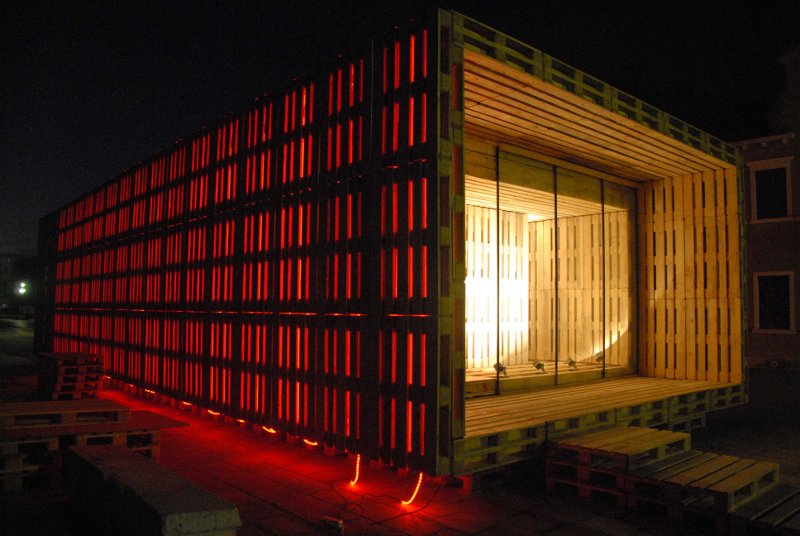
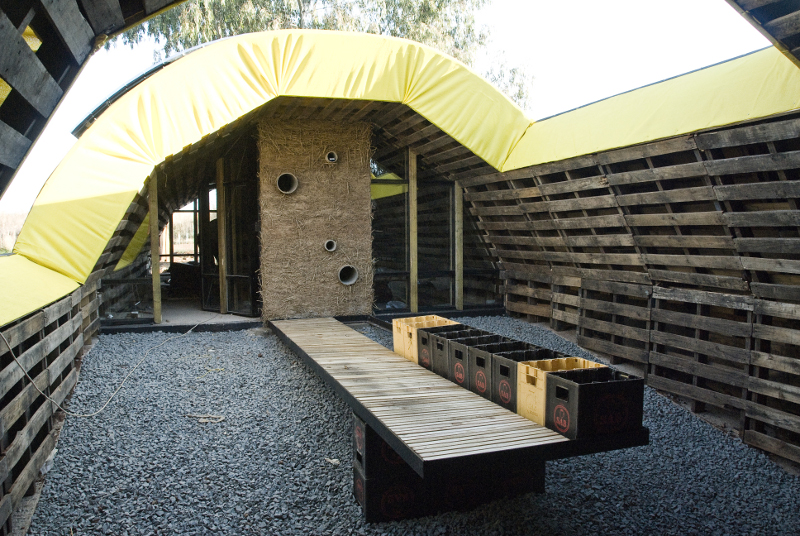
It is made of 800 used pallets, which are thus conducted to a second phase of utilization. The pallets are joined to modules with the goal of a short construction time. The multi-layer construction offers enough interior space for installations, insulation and lighting.
The "Pallet House" is particularly suitable for temporary use at different locations. It is ecological, energy-efficient and cheap and can be reconstructed later in other locations with little expenditure. The "Pallet House" is designed to be prefabricated, multiplied and grouped to ensembles with village character.
Preparation for Mass Production
Within the scope of this research project the "Pallet House" was developed further in detail and prepared for mass production. This includes static and building physics records, the 3-dimensional simulation of thermal bridges, and the calculation of the longtime heating demand (based on the climate in Vienna Aspern) as quality assurance standards of the passive house and the checking of its suitability for summer conditions.
As a basis for the implementation of the "Pallet House", the in-house technical concept including equipment and cost estimates were developed. Floor plans demonstrate the excellent suitability and adaptability for different uses.
As a result of the research project, the "Pallet House" has reached the required standard to be used in greater numbers e.g. scenario for a temporary use during construction in the "Seestadt Aspern".
The "Pallet House" for South Africa
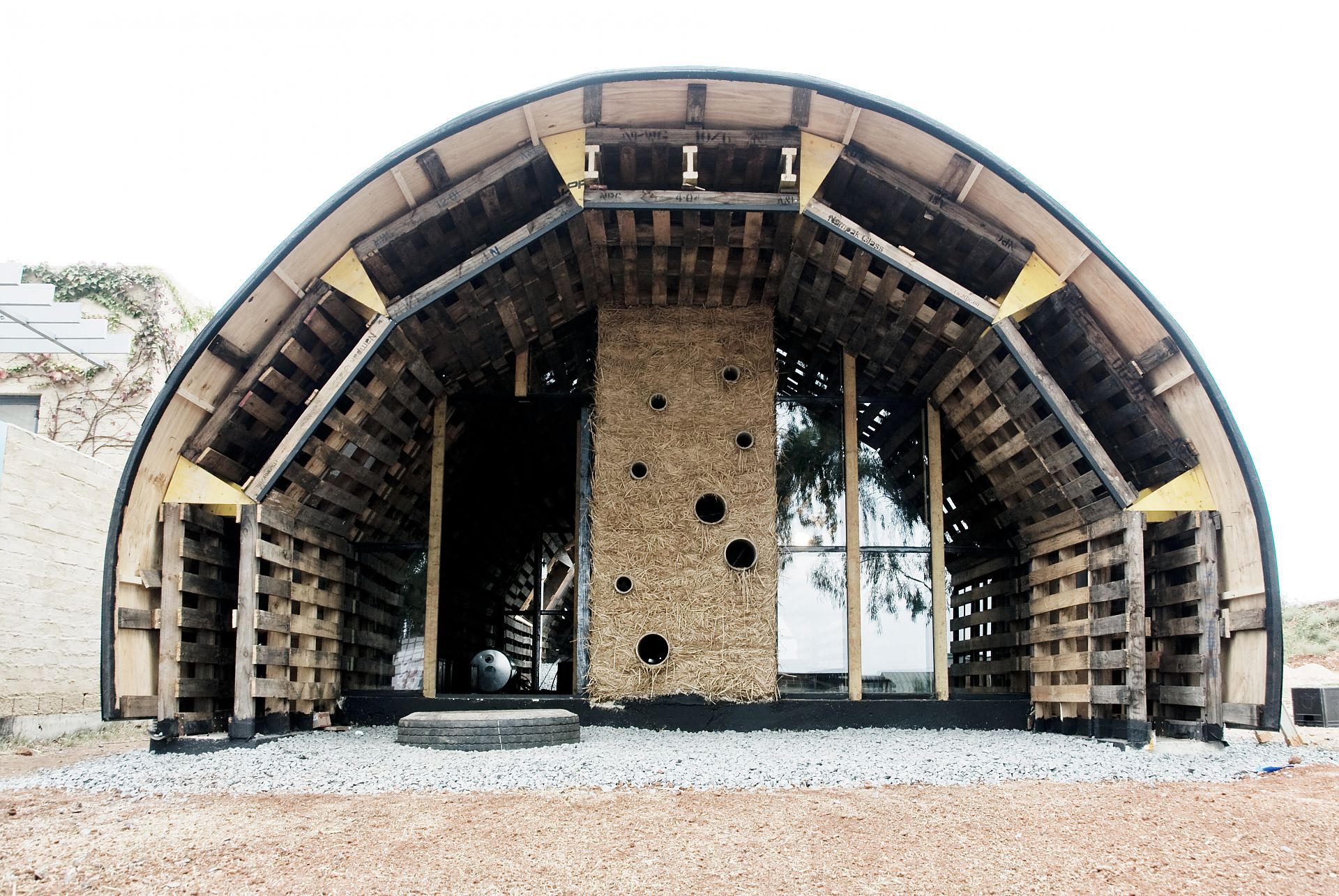
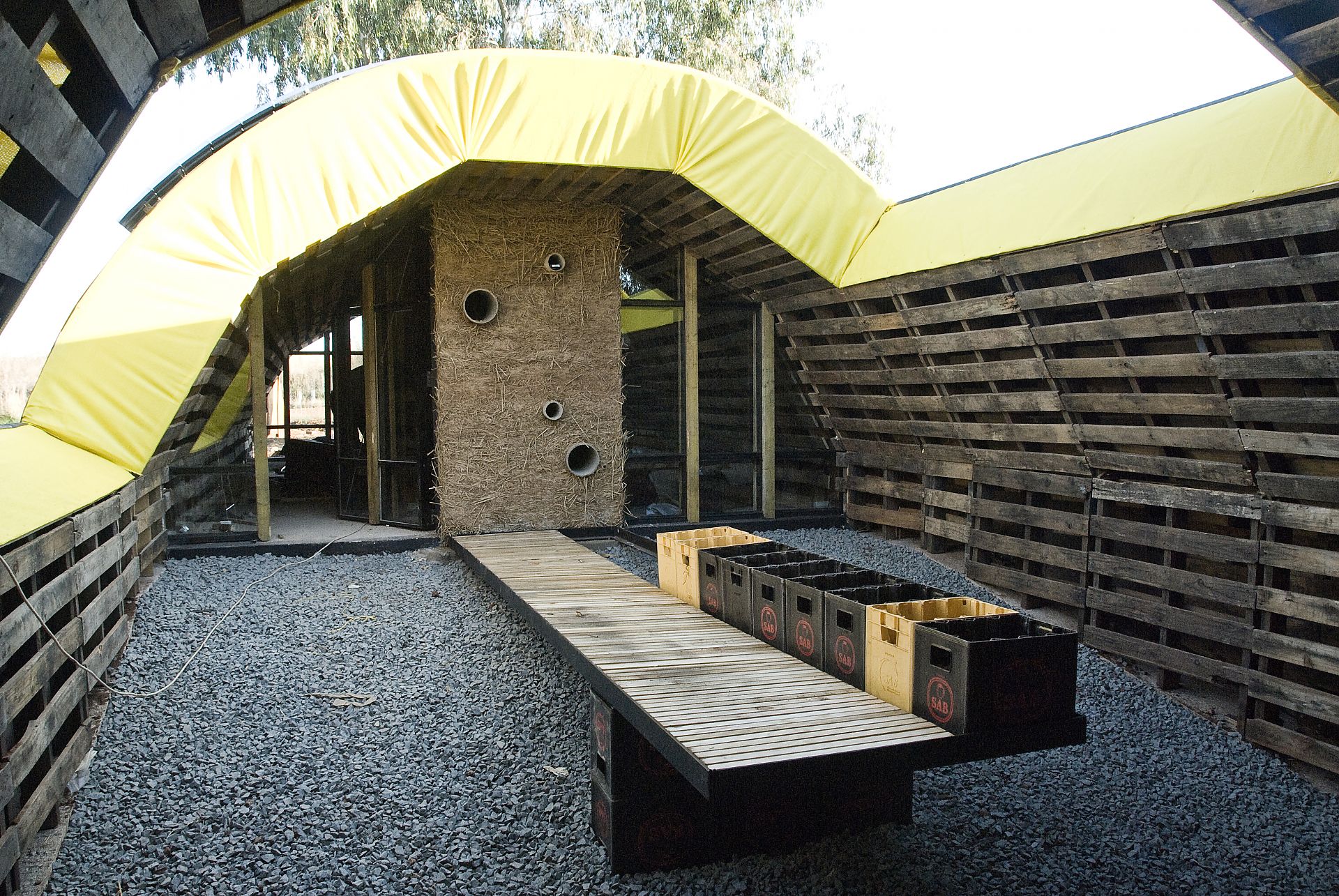
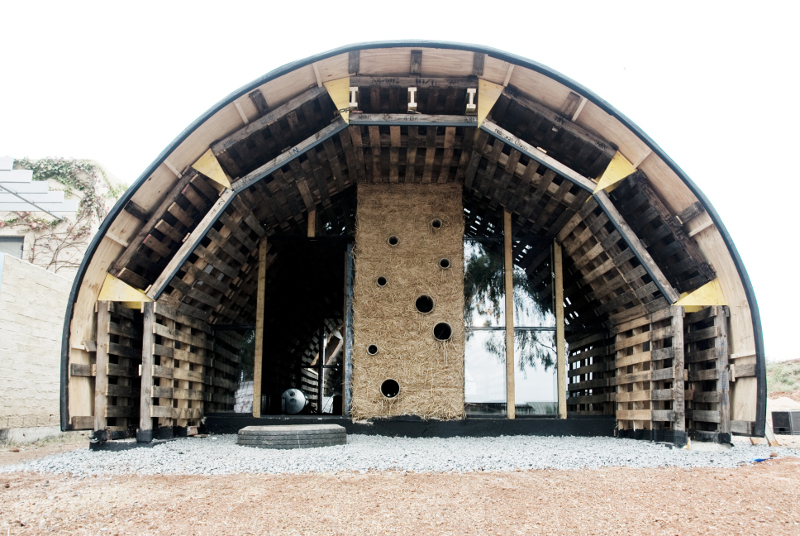
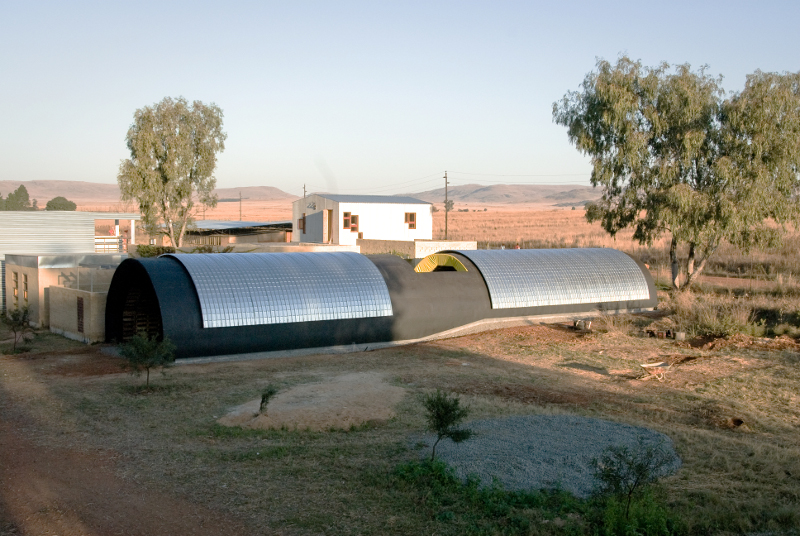
In a second step a new, wood-efficient type in barrel shape was designed for the site in South Africa and built 1:1 on the ground - insulated with straw, filled in with clay and adjusted to the climate with a sheet metal cover.
The local population of the township south of Johannesburg (South Africa) and the students of Ithuba Skills College were integrated into the construction process. Construction costs, affordability and the dissemination of the know-how necessary for such a building process were a major concern.
The demonstration project has already been officially opened and put into operation during the project period. For this building type and location again all records were created (static, physics, heating demand, summer conditions). Construction and completion were very well documented by photos and film. These are part of the project report.
The "Pallet House" for the "Inter-use"-Concept in "Seestadt Aspern"
The basic situation of the social-scientific and spatial planning oriented research within the project is marked by the multi-layered process of the urban development in the "Seestadt Aspern", which requires new forms of "inter-use" during the construction phase of the quarter.
Urban development can be characterized as a social and a social process where urban settlements, living and working patterns are made by different actors. In this production process of urban developement innovative forms of urban management play an essential role.
Contributions of heterogeneous social groups can be steered and presented. The new model of urban management, which will be provided by the project all around the "Pallet House", places special emphasis on the creation processes, participation and appropriation processes of the future inhabitants and other social groups.
Besides, the "Pallet House" as a place and space of this model of urban management is conceived as an interface which mediates between places and spaces, between social action and social groups, between existing and joining urban accommodations and the new urban planning area as well as between technical and content subjects of urban development. The social-scientific methodology is based on urban basic research with analysis of documents within the meaning of "desk-top research", an Internet survey of stakeholders and intensive interviews with experts in urban development in Vienna.
Results
The results of these urban-sociological researches are the identification of actors and their interests, the motivations and aims of a temporary use of the "Pallet House" in the "Seestadt Aspern". Other results are the definition and concept of the role of the "Pallet House" as a place and space of a part of town planning as well as in the production of a map showing possible uses and actors for the temporary use of the "Pallet House".
The findings and recommendations of the urban sociological part of the research project are in the sharpening of the positions of the different interests of the actors in the inter-use of the "Pallet House", to develop new innovative forms of town management in the "Seestadt Aspern". As a result of the urban sociological analysis, the "Pallet House" can play a central role in the urban development process of "Seestadt Aspern", if
- identified different uses and activity potentials of the "Pallet House" as part of a management process of urban development are anchored
- the establishment and creation of an integrative quarter management as an interface between the areas of housing, work, leisure, mobility, etc. the public space takes over
- it is possible to embed the different uses of the "Pallet House" into a comprehensive strategic approach to development, which initiated attractors, receptors, and incubators for neighborhood development.
The results of the research project show that the object "Pallet House" is both - a material and social space that can arise from the impetus to urban development.
As an implementation of results the "inter-use-concept" for Aspern is clearly presented in a site plan / map. The proposed uses finally were vividly described in words and pictures.
Project Images
Terms of use: The pictures listed underneath the header “Project Pictures” originate from the projects in the frame of the programmes City of Tomorrow, Building of Tomorrow and the IEA Research Cooperation. They may be used credited for non-commercial purposes under the Creative Commons License Attribution-NonCommercial (CC BY-NC).
Publications
Fotos
Videos
Construction of a "Pallet Tube" by Gregor Pils and Andreas Claus Schnetzer as part of the Sustainability Challenge 2011
The video is provided via Vimeo , a connection to the servers of Vimeo is established (see privacy policy).
Presentation: Project "Pallet House" by Andreas Claus Schnetzer at the TEDx Pannonia in September 2010
The video is provided via Youtube , a connection to the servers of Youtube is established (see privacy policy).
Project Partners
Project management
Vienna Technical University
DI Dr. Karin Stieldorf - Department for Architecture and Design
Project or cooperation partner
Vienna Technical University
Dr. Oliver Frey - Department for Spatial Development, Urbanistics
Contact Address
Vienna Technical University
Department for Architecture and Design
DI Dr. Karin Stieldorf
Gusshausstraße 30
A-1040 Wien
Tel.: +43 (1) 58801 - 27041
E-Mail: karin.stieldorf@tuwien.ac.at